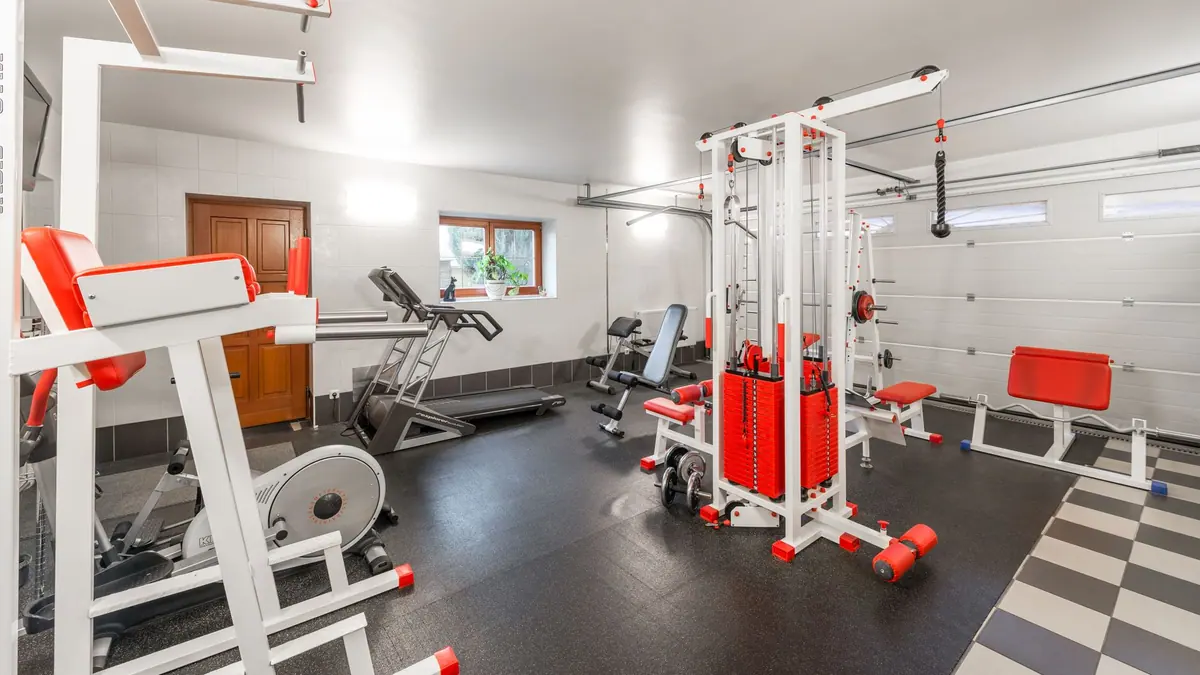
The treadmill argument is usually conducted as though one option were objectively better. It is not. A treadmill is a machine for removing obstacles — darkness, ice, rain, traffic, the need to leave the house at all — and it introduces one large obstacle of its own, which is that running on the spot is monotonous.
Outdoor running has the opposite profile. It is free, endlessly varied, and better for most people psychologically, and it is unavailable or unappealing on a meaningful number of days each year. Which of those two problems is the one actually stopping you is the whole question.
What the treadmill genuinely solves
Treadmills are frequently dismissed by people whose circumstances make outdoor running easy. For a great many others the machine removes obstacles that are real rather than excuses.
Darkness is the clearest. Anyone whose only free hour is before work in winter, or after dark, is choosing between a treadmill and unlit streets. Safety is the second: running alone in the dark is a genuine constraint for many people, and no amount of enthusiasm for fresh air changes that calculation.
Then there is caring responsibility. A parent who cannot leave the house while a child sleeps can run on a treadmill and cannot run outdoors, and that is not a preference — it is the difference between training and not.
What it costs you
Monotony is the honest headline. Running on the spot without changing scenery is harder to sustain mentally than covering ground, and the drop-off in treadmill use after a few months is well known to anyone who has sold one second-hand.
There are also physical differences. A treadmill belt moves under you, which slightly changes the mechanics compared with propelling yourself over ground. The surface is consistent, which is gentler and also means none of the small variations that outdoor running provides. Neither difference is a problem in itself; both mean treadmill running and outdoor running are not quite interchangeable.
And then the practical costs: a large object in a room, a substantial price, a motor that is audible through a floor, and the fact that it is extremely difficult to move once installed.
The resale market tells the story more plainly than any review. Lightly used treadmills are abundant and cheap, which is a straightforward signal about how often the purchase turns into a habit. That is worth knowing in both directions: it should make you cautious about buying new, and it makes second-hand an unusually good option in this category if you can arrange the collection.
The comparison
| Factor | Treadmill | Outdoors |
|---|---|---|
| Availability | Always, whatever the weather or hour | Weather, light and safety dependent |
| Cost | Substantial, plus electricity | Shoes |
| Space and noise | Large, and audible downstairs | None |
| Pace control | Precise, which suits interval work | Requires judgement or a watch |
| Enjoyment | Low for most people over time | High, and it is the reason people continue |
| Hills | On demand, at any gradient | Whatever your area has |
| Surface variety | None | Constant, which many find valuable |
The pace control row is the most under-appreciated advantage. Structured interval sessions are considerably easier on a treadmill, because the machine holds the pace rather than asking you to. For anyone training to a plan rather than running for pleasure, that is a real benefit.
The enjoyment row, though, is the one that decides outcomes over a year. Training that is pleasant continues and training that is a chore does not, and no amount of convenience compensates for dreading the session. This is why people who love running outdoors rarely convert to treadmills, and why people who run because they should rather than because they want to often find the machine easier to sustain — it is shorter, controllable, and finishes when the display says so.
Hills deserve a mention too, because the machine has a genuine advantage that gets overlooked. If you live somewhere flat and want to train on gradients, a treadmill is the only practical way to do it. If you live somewhere hilly and want to avoid them, it is equally useful in reverse.
The middle answer
Most people who own a treadmill and use it well treat it as a supplement rather than a replacement. Outdoors when the weather and the light allow; the machine when they do not. Framed that way the purchase is not a bet on preferring to run indoors — it is insurance against the twenty or thirty days a year when running outside is genuinely impractical.
Whether that insurance is worth the money and the floor space is an individual question, and the honest answer for many people is no. A gym membership covers the same days for less commitment, and running in bad weather in decent kit is a perfectly reasonable alternative — our jacket piece is fairly blunt that runners are usually better off accepting they will get wet.

If you buy one
- Check the ceiling height. Running adds several inches to your standing height, and low ceilings rule out taller decks.
- Measure the room with the deck folded and unfolded. Folding models still need floor space to open.
- Consider the floor below you. Motors and footfall carry, as covered in our home gym roundup.
- Prioritise deck length if you are tall. A short deck forces a shortened stride.
- Look for incline rather than top speed. Incline is what most people actually use.
- Check how it gets into the room. These are heavy and awkward, and stairs are a real obstacle.
What to know before you buy
The single most useful exercise is to count the days last year when weather, darkness or circumstance stopped you running. If that number is small, a treadmill is an expensive solution to an occasional problem. If it is large, or if the obstacle is safety or caring responsibility rather than weather, the machine is solving something real.
Is running on a treadmill easier than outdoors?
Slightly, at the same pace, because the belt assists and there is no air resistance. Many people add a small incline to compensate. It is a modest difference and not a reason to dismiss treadmill training.
Is a treadmill bad for your joints?
The surface is more consistent and generally more forgiving than pavement, which some people find helpful. Anything involving pain or a recurring injury is a question for a physiotherapist rather than an equipment comparison, and nothing here is medical advice.
Are cheap treadmills worth buying?
Below a certain point the motor is not rated for sustained running and the deck is too short for a natural stride, which produces a machine that is unpleasant rather than merely basic. If the budget only reaches that tier, a gym membership is the better use of the money — the reasoning in five questions before any large purchase applies directly.
Decide by naming the obstacle. If it is weather, and there are only a handful of days, buy a jacket. If it is darkness, safety or being unable to leave the house, the treadmill is solving a problem nothing else solves and is worth the space. And if the honest obstacle is that you do not enjoy running, a machine in the corner of a room will not change that.