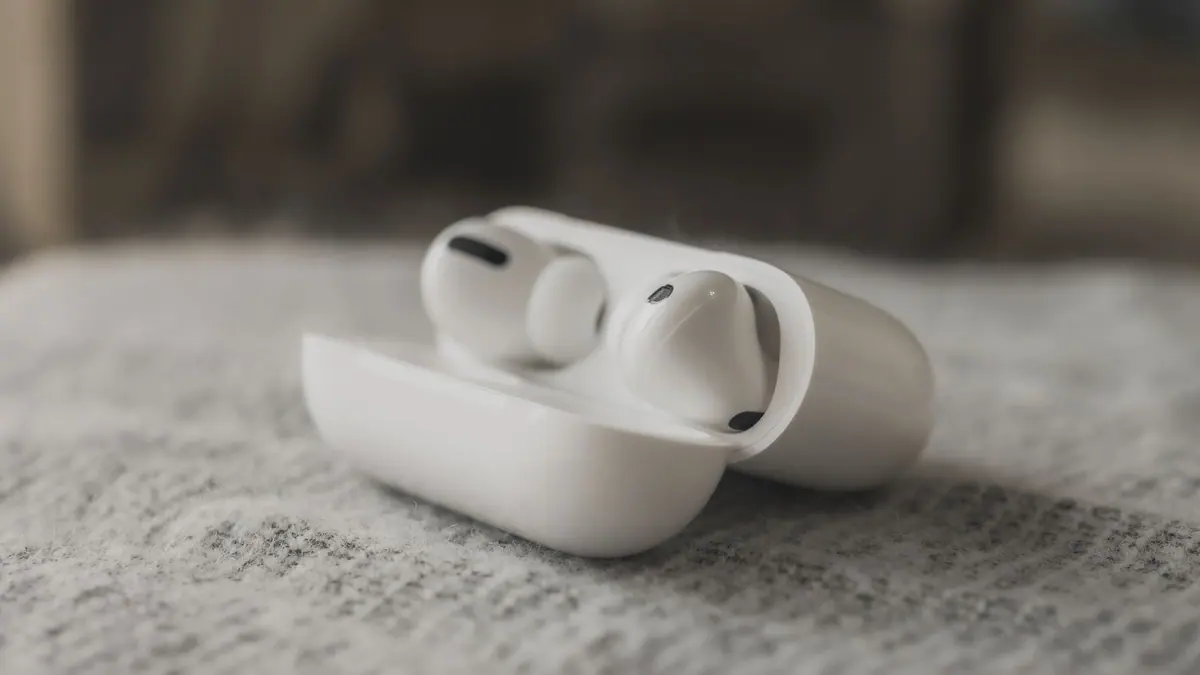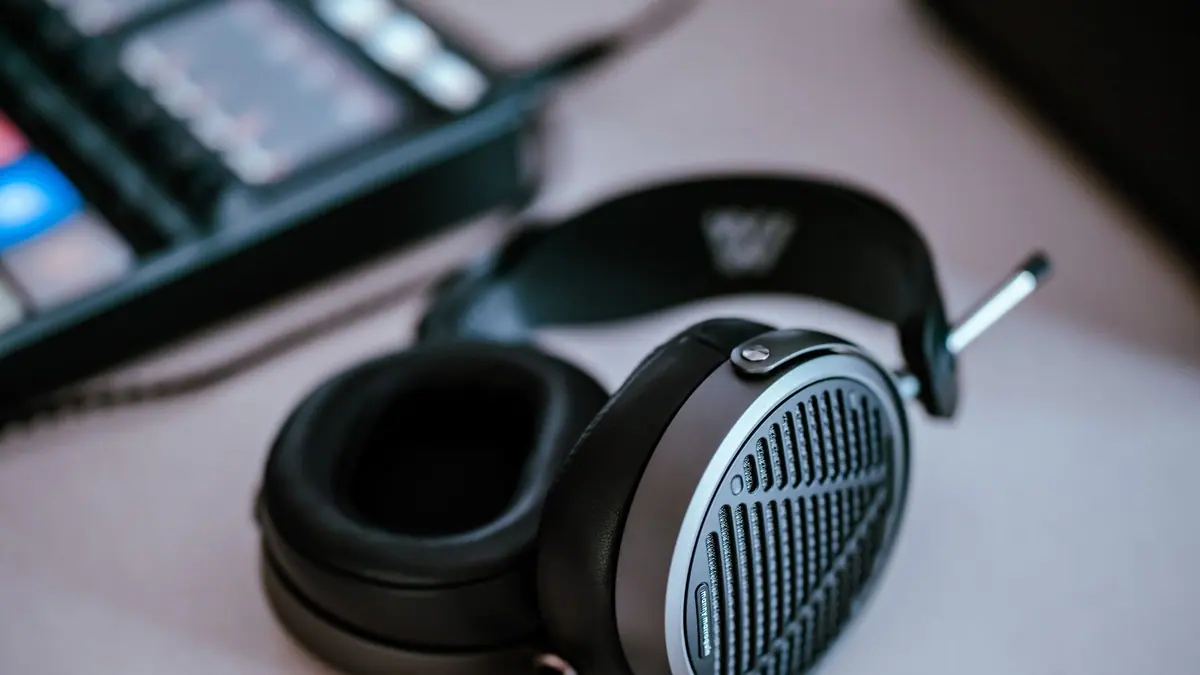
Wireless audio has become the default so completely that choosing a cable now feels like a statement rather than a decision. It should be a decision. Wireless solved a real problem — being tethered to a device you are carrying — and in solving it introduced several others that only matter in specific situations, but matter a great deal when they do.
This is not an argument that cables are better. It is an argument that the two are good at different things, and that a large number of people have quietly bought the wrong one because the shop had a wall of the other.
The cost difference is larger than it looks
At any given price, a wired pair spends more of that money on sound. There is no battery, no radio, no charging circuitry, no case, and no processor. Everything goes into drivers and build. The practical effect is that a wired pair typically performs like a wireless pair costing considerably more, and the gap is widest at the lower end of the market where the fixed cost of the electronics eats the largest share of the budget.
There is a second cost that arrives later. A battery is a consumable, and in most sealed wireless products it is not replaceable. That sets an expiry date on the product regardless of how well the rest of it is made — a point we make more generally in buy it for life versus replace it twice. A cable has no such clock, and a worn cable on a detachable design costs very little to replace.

Where each genuinely wins
| Situation | Better choice | Why |
|---|---|---|
| Fixed desk, all day | Wired | No charging, no pairing, better sound per pound, nothing to forget. |
| Commuting and travel | Wireless | No cable to snag, and cancellation matters most where noise is worst. |
| Exercise | Wireless | A cable transmits every footfall as noise and catches on everything. |
| Music production or monitoring | Wired | Latency is fixed and predictable; wireless latency is neither. |
| Competitive gaming | Wired, usually | Low-latency wireless exists but costs more to do properly. |
| Video calls from anywhere | Depends | Wireless for freedom to move; wired if a dropped connection would be costly. |
The pattern is that wireless wins wherever movement is involved and wired wins wherever precision or reliability is. Neither wins on sound in absolute terms at the top of the market; the difference there is small enough to be a preference rather than a ranking.
Latency is the argument people get wrong
Modern wireless is far better at latency than it used to be, and for watching video the platform usually compensates by delaying the picture to match. That works. What it cannot do is help when the audio needs to line up with something happening in the room — playing an instrument, recording a voice, or reacting to a sound in a game.
The subtler problem is variability. A cable’s delay is constant. Wireless delay changes with interference, with the device, and sometimes with what else is connected. A predictable delay can be worked around; an unpredictable one cannot.
This is why the advice splits so cleanly by activity rather than by budget. Watching a film is a solved problem on any modern wireless pair, because the delay is known in advance and the player compensates for it. Playing along to a recording is not solved and is unlikely to be, because the compensation trick requires knowing what is coming next, and a person making a sound in a room does not give the system that warning.
Reliability, and the meeting that starts badly
Every wireless failure mode is a small one. A pair that connects to the wrong device, a bud that has not charged in its case, a connection that stutters when the microwave runs. Individually trivial; collectively, they are the reason a lot of people keep a wired pair in a drawer for anything that matters.
If your calls are consequential, the calculation is simple. A cable removes an entire category of things that can go wrong at the worst moment, and it does so for less money.
Battery management is the part people underestimate. A wired pair is always ready. A wireless pair requires a small ongoing habit — returning buds to a case, remembering an overnight charge before a long day — and habits fail on exactly the days that are busiest. The failure is never catastrophic and always badly timed.
There is also a quieter reliability advantage in the number of things involved. A cable is one component with one obvious failure mode that announces itself gradually as crackle. A wireless pair has a battery, a radio, firmware, a charging case with its own battery, and a pairing relationship with every device you own. Each is reliable in isolation. There are simply more of them.
The modern complication: no socket
The strongest practical argument against wired audio is that many phones no longer have anywhere to plug it in. An adapter works, but it occupies the charging port, is easy to lose, and adds a component that can fail.
This is genuinely decisive if your listening is mostly on a phone away from a desk. It is close to irrelevant if your listening happens at a computer, which still has sockets, or through an interface that has better ones. Be honest about which describes you, because this single fact settles the decision for a lot of people.
What to know before you buy
- Count where you actually listen. Hours at a desk versus hours moving decides this more than any specification.
- Check for a detachable cable on any wired pair. A fixed cable turns a cheap failure into a dead product.
- Check whether your devices have a socket before committing, including the one you use most.
- If you buy wireless, check it still works wired with a flat battery. Many pairs do; some lose features.
- Do not pay twice for cancellation you will not use. At a quiet desk it is a feature you are subsidising.
- Consider owning both. A modest wired pair plus a modest wireless pair often beats one expensive compromise.
Does wired always sound better?
At the same price, usually — because more of the budget went into sound. At the top of the market the gap narrows to the point where preference, fit and source quality matter more than the connection. Fit matters more than either, which is the conclusion we also reach in the earbuds roundup.
Is Bluetooth audio compressed?
Yes, always — the connection does not have the bandwidth to carry audio uncompressed. Modern codecs are good enough that this is not the limiting factor for most listening, and it sits well below fit, seal and the recording itself in importance. It is a real difference, not a large one.
Should I buy a headphone amplifier?
Only if the headphones you own are hard to drive and sound quiet or thin from your device. For most consumer headphones, the output of a laptop or a phone adapter is sufficient, and an amplifier changes nothing you can hear. Buy the headphones first, then find out.
The honest conclusion is that this was never a war one side won. Wireless is the right default for a life spent moving, and the wrong one for eight hours at the same desk. Work out which of those describes the majority of your listening, buy for that case, and if the answer is genuinely both, buy two modest pairs rather than one expensive compromise that is second best at each.