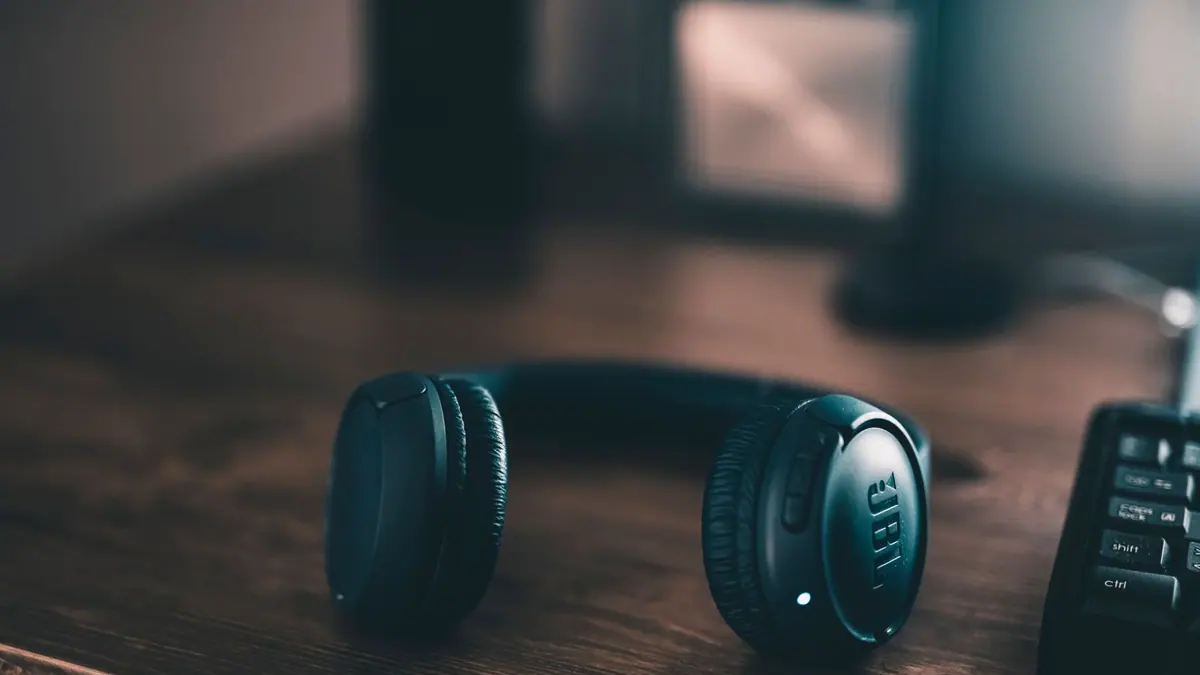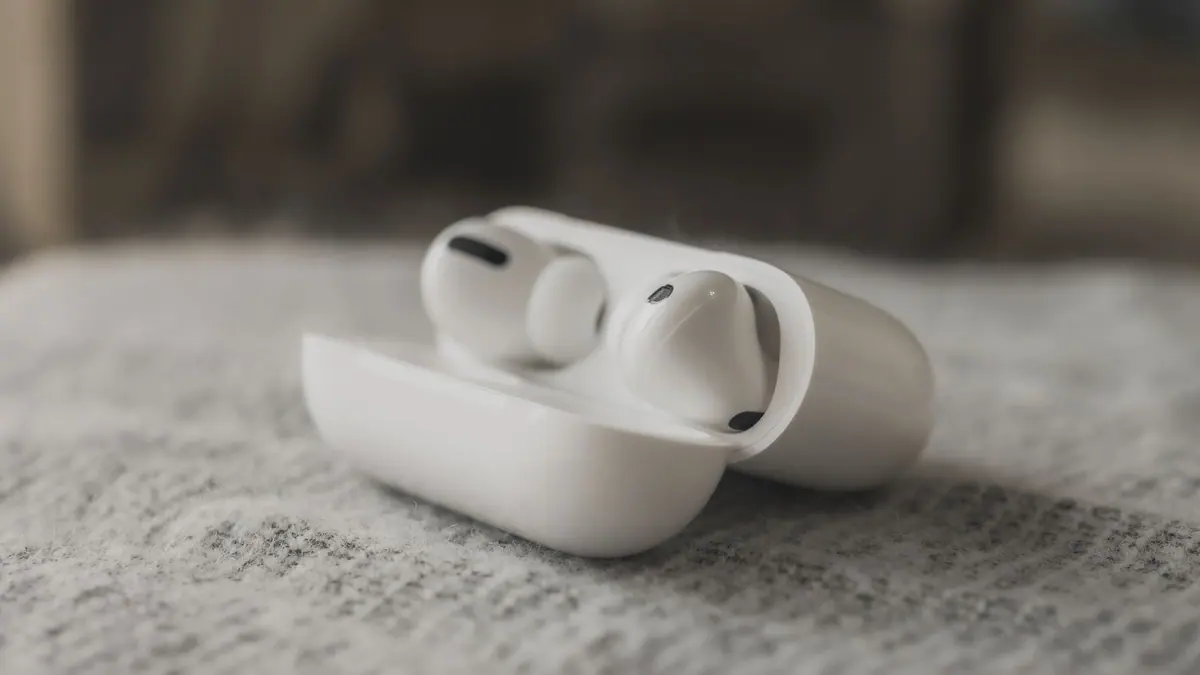
If you wear glasses all day, over-ear headphones are working against you. The arm of a spectacle frame passes straight through the point where the earpad is supposed to meet your head, and even a small gap lets low frequencies in. Noise cancelling circuitry cannot fix a physical leak, which is why the pair that impressed you in a shop can be disappointing on the train home.
Earbuds remove the problem rather than managing it. Nothing presses against the frame, nothing heats up behind your ear, and the seal is formed inside the ear canal where glasses have no influence. The catch is that earbuds introduce their own failure mode: fit. Get that wrong and you lose the seal a different way.
Fit is the whole review
Almost every quality that people attribute to earbuds — bass response, noise isolation, how loud they need to be — is downstream of whether the tip seals. An unsealed earbud sounds thin, isolates badly, and gets turned up to compensate. The same earbud, sealed, sounds like a different product.
This is why tip selection matters more than any specification. Most pairs ship with three sizes and most people use the ones already fitted. Try all of them, and try a different size in each ear: ear canals are frequently asymmetric, and a mismatched pair is a completely legitimate solution rather than a compromise.
There is a quick test that settles it. Put the buds in, play something with obvious low end, then press each one gently further into your ear with a fingertip. If the bass suddenly arrives, you did not have a seal — and the answer is a larger tip, not a different pair of earbuds. If nothing changes, the seal was already good and the sound you are hearing is the sound the product actually makes.
Material matters too. Silicone tips are easy to clean and slide into place, but they rely on tension against the canal wall, which is why they work loose over a long walk. Foam tips compress and then expand to fill the canal, giving a more reliable seal and better isolation at the cost of a slightly muffled top end and a shorter life. People who lose the seal repeatedly with silicone are usually the people foam was made for.

What to look for, in order
The order matters, because the first two decide whether you keep them.
- Retention. Whether they stay in when you turn your head, chew, or walk quickly. Wing tips and shallow-angle nozzles help; smooth spheres do not.
- Tip range. Four or more sizes in the box, and third-party tips that fit the nozzle. This is the cheapest fix for almost every complaint.
- Case size. A case that does not fit a pocket gets left at home, and an earbud left at home has no features at all.
- Transparency quality. More useful than cancellation for most people, because you use it far more often.
- Controls that work in the rain. Touch panels misread wet fingers. Physical buttons do not.
The three shapes, and who each suits
| Type | Seals? | Best for | Weakness |
|---|---|---|---|
| Sealed in-ear with tips | Yes | Commuting, offices, anywhere noisy | Occlusion — you hear your own footsteps and voice |
| Open or semi-open | No | Running near traffic, long office wear | Almost no isolation; useless on a train |
| Ear-hook or clip-on | Varies | Exercise, anyone whose buds fall out | Bulk near the temple, which glasses can catch |
The ear-hook category deserves a caution for this audience specifically. A hook that wraps behind the ear shares space with a spectacle arm, which reintroduces exactly the pressure point you were trying to avoid. Clip-on designs that sit in front of the ear avoid this; over-ear hooks often do not.
Cancellation versus isolation
A well-sealed earbud provides substantial passive isolation before any electronics are involved. Active cancellation then adds most of its benefit against low, steady noise. For voices in an open-plan office, the seal is doing the heavy lifting and the cancellation is a modest bonus — which is the same conclusion we reached for over-ears in what the hours after the first hour reveal.
The practical consequence is that a sealed pair without cancellation often outperforms an unsealed pair with it. If your budget is tight, spend it on fit rather than on features.
There is a second-order effect worth knowing about. Sealing your ear canal creates occlusion, which is why your own voice sounds boomy and your footsteps become audible from the inside. Cancellation circuitry reduces this slightly, and good transparency modes remove it almost entirely, but no earbud eliminates it. If occlusion bothers you — and for some people it is intolerable within minutes — that is a reason to look at open designs rather than to keep buying sealed ones and hoping.
Who this isn’t for
Earbuds are the wrong answer if you get ear discomfort or an itch from anything sealed in the canal — a genuinely common reaction that no amount of tip-swapping resolves. They are also wrong if you need to wear something for six or eight hours continuously, where even a good fit becomes tiring in a way an over-ear pad does not.
Skip them, too, if your main use is at a fixed desk with no noise problem. At a desk, a wired pair costs less, never needs charging, and sounds better for the money. That argument is set out in full in when the cable is still the right answer.
What to know before you buy
- Test the fit while moving. Standing still proves nothing about retention.
- Buy third-party tips early. They are inexpensive and fix more complaints than any firmware update.
- Check single-bud use. Some pairs only allow one specific side to work alone, which is limiting on calls.
- Confirm the case charges the way you charge everything else. A second cable type is a small, permanent annoyance.
- Look for an IP rating if you walk in the rain. Sweat and drizzle end more earbuds than drops do.
- Check replacement availability. Losing one bud should not mean replacing the pair.
Do earbuds work with glasses better than over-ears in every case?
For the seal, yes — glasses simply cannot interfere with a tip inside the ear canal. For comfort over very long sessions, not necessarily. Many people find a well-fitting over-ear more comfortable for a full day, provided the pads are deep enough to close around the frame arms.
Why do my earbuds sound bass-light?
Almost always a broken seal. Low frequencies escape first, so thin bass is the earliest symptom of a fit problem. Before adjusting an equaliser, try a larger tip size, and try rotating the bud slightly forward as you insert it.
Is it worth paying for the flagship model?
Only for the things fit cannot fix: call microphone quality, transparency that sounds natural, and reliable multipoint switching between two devices. Sound quality differences above the mid tier are smaller than the difference between a sealed and an unsealed fit on the same pair.
The summary for anyone in glasses is short. You are not choosing between good and bad earbuds so much as between a pair that seals on your ears and one that does not. Buy from somewhere with a real returns policy, try every tip in the box on the first evening, and treat retention as the specification that matters. Everything the marketing talks about depends on getting that right first.