Footwear is one of the few remaining categories where a genuinely long-term purchase is still available, and also one where the difference between a long-term purchase and a disposable one is almost invisible unless you know where to look. Two boots can use similar leather, look similar on the shelf, and have completely different economics — because one can be resoled and the other cannot.
Soles wear out long before good uppers do. A leather upper that is cared for will outlast several soles. So the question that decides what a boot actually costs you is not what it costs today; it is whether, when the sole goes, you are looking at a repair or a replacement.
How the sole is attached decides everything
There are three broad ways to join an upper to a sole, and you can identify all of them by looking at the edge of the boot.
A cemented sole is glued. It is light, cheap and perfectly functional, and when the bond fails or the sole wears through, the boot is finished. A cobbler can sometimes re-glue a sole once, but there is no structure designed for repeated replacement.
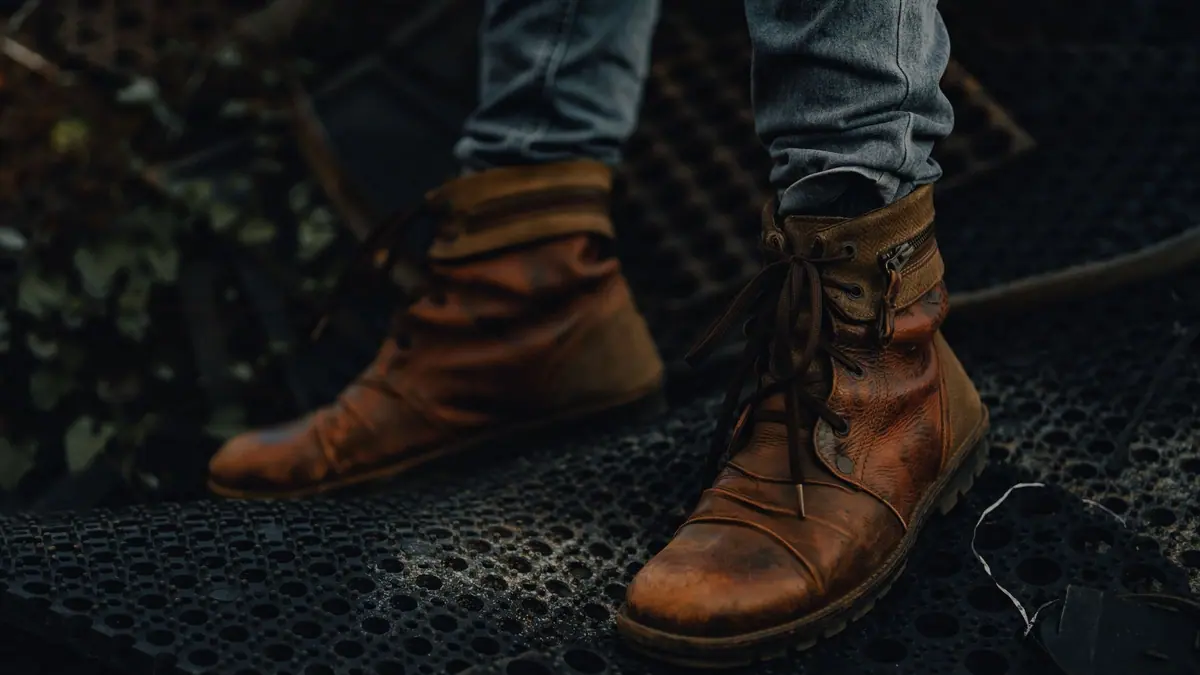
A Goodyear welted boot has a strip of leather — the welt — stitched to the upper and the insole, with the outsole then stitched to the welt. You can see the stitching running around the outside of the sole. This construction exists specifically so the outsole can be cut away and a new one stitched on, repeatedly, without disturbing the upper.
A Blake stitched boot is sewn straight through from insole to outsole. It is more repairable than cemented and less than welted, and it produces a sleeker profile because there is no welt sticking out. Not every cobbler has the machine, which is worth checking locally before you rely on it.
The maths that surprises people
| Construction | Repairable? | Typical outcome |
|---|---|---|
| Cemented | Effectively no | Replaced when the sole goes, upper still serviceable |
| Blake stitched | Yes, by some cobblers | Resoled once or twice |
| Goodyear welted | Yes, repeatedly | Multiple resoles; the upper decides the lifespan |
| Storm welted | Yes, repeatedly | As Goodyear, with better water resistance at the join |
Work the cost out per year rather than per pair. A welted boot at three times the price of a cemented one, resoled twice over a decade, generally comes out ahead — and it comes out further ahead the more you wear it, because the resole cost is fixed while the alternative is buying the whole boot again.
The caveat is that this only works if the upper survives long enough to justify it, which is why leather quality is the second half of the question rather than an aesthetic preference.
Leather grades, without the marketing
Full-grain leather keeps the outer surface of the hide intact, including its natural grain. It is the strongest part, it develops a patina, and it can be reconditioned repeatedly. Top-grain has had that surface sanded away to remove blemishes, then had a finish applied — it looks more uniform and is less durable. Corrected grain and bonded leather are further steps down the same road.
The distinction matters for repairability as much as for wear. A full-grain upper can be cleaned, fed and brought back after years of neglect. A heavily finished surface cracks, and once the coating cracks there is nothing underneath to restore.
Linings are worth a look too. An unlined or leather-lined boot breathes and moulds to the foot; a synthetic lining traps moisture and is the usual reason a boot starts to smell in its second year.
The insole is the third component worth asking about, and the one most often quietly downgraded. A leather insole compresses over the first few weeks to take the shape of your foot, which is why a well-made boot becomes more comfortable with wear rather than less. A fibreboard insole does not; it stays flat, and when it does eventually break down it crumbles rather than moulds. From the outside the two are indistinguishable, so it is a question worth asking directly.
Welt type is the last detail worth knowing. A storm welt has a raised lip where the welt meets the upper, which sheds water at the join and is a genuine advantage in wet weather. A flat welt is sleeker and slightly less protective. Neither affects repairability, so choose on where you walk rather than on which looks more serious.
Fit is not negotiable, and it changes
Leather boots stretch across the width and barely at all in length. That means a boot that is snug across the ball of the foot will become comfortable, and a boot that is short will stay short forever. Buy for length first and accept a firm width.
Expect a break-in period of a few weeks for a welted boot, during which the insole compresses and forms to your foot. That is normal and is part of why these boots become comfortable in a way moulded footwear does not. What is not normal is heel slip that does not settle, or pressure on a specific point — both indicate the wrong last shape for your foot, and neither is fixed by persistence.
Who this isn’t for
Skip welted boots if you need light footwear, walk long distances daily on hard surfaces, or want something waterproof out of the box. Welted construction is heavy and stiff, and modern hiking and running footwear is better at those jobs by a wide margin. Buying the wrong tool because it lasts longer is still buying the wrong tool.
Skip them too if you wear boots occasionally. The economics rest on frequency: a pair worn twice a month will not reach its first resole for many years, by which time fashion or your taste may have moved. In that case a cemented boot at a fraction of the price is the honest recommendation.
What to know before you buy
- Look at the sole edge for a line of stitching. That single detail identifies the construction.
- Find a cobbler before you rely on repairability. Confirm they resole the construction you are buying.
- Buy for length, accept firm width. Leather widens; it does not lengthen.
- Check the lining. Leather or unlined ages far better than synthetic.
- Ask about the last if you have a wide or narrow foot. Last shape matters more than size.
- Buy cedar trees and use them. They cost little and materially extend the life of the upper.
How often will boots need resoling?
It depends entirely on how much you walk and on what surfaces. Rather than a schedule, watch the sole: when the tread is worn through at the ball or heel and before the welt stitching is exposed, it is time. Leaving it until the welt is damaged turns a routine repair into an expensive one.
Is full-grain leather always better?
For durability and restorability, yes. For softness and immediate comfort, not necessarily — some corrected leathers feel supple straight away. The trade is comfort now against condition later, and full-grain is the choice that rewards patience.
Are expensive boots worth it?
Only if the construction supports repair and you wear them often enough for that to matter. An expensive cemented boot is the worst combination available: premium price, disposable structure. The general framework is in buy it for life versus replace it twice, and the sizing question is covered in finding your size when brands disagree.
The short version is that the sole edge tells you what you need to know. Stitching means the boot was designed to be repaired; a smooth glued edge means it was designed to be replaced. Neither is wrong, but only one of them makes a high price rational, and knowing which you are looking at turns a confusing category into a straightforward decision.